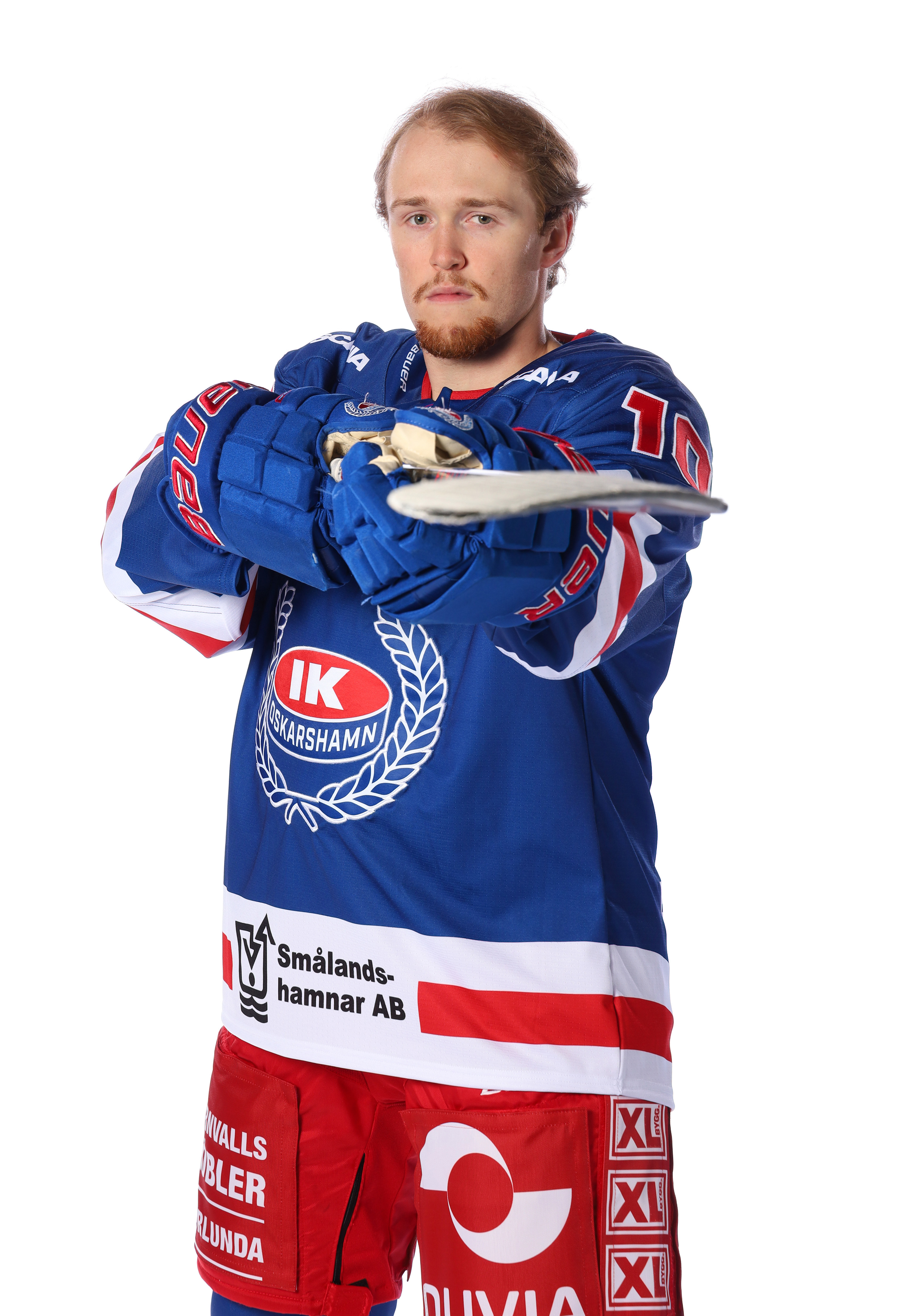
IK do not have to wait for new signings to get more out of the players already in the squad. There are changes to make right now. The most important is moving Matt Brown into the centre.
After two poor performances, against Vimmerby and AIK, it is difficult to argue that IK should continue exactly as before. There is enough talent in this team to perform much better, but too little of it is being used effectively.
We have called for harder work, more responsibility and more blue-collar effort. That still applies. But the coaches also have to find combinations that make the best use of the players' strengths.
We would like to see some clear changes even before any reinforcements arrive.
And it all starts with Matt Brown.
Brown should not chase the game – he should direct it
Matt Brown is one of IK's smartest players. He reads the game quickly, has excellent hands, strong hockey sense and a knack for finding solutions that are not always obvious.
He is fast, too.
As a winger, that speed is valuable, especially on the counterattack. Brown can carry the puck, challenge defenders and create chances. He will continue doing so if he stays on the wing.
But does IK really get the maximum possible value from him in that position?
We do not think so.
Brown is too intelligent to be used primarily as a player who attacks at speed down the outside and tries to create something on his own.
At centre, he could become the player who makes two others better.
He would have more opportunities to influence play through the middle, offer an outlet on breakouts, distribute the puck, control the tempo and open up chances for his wingers.
We might see fewer of his individual attacking runs. He might even score a few fewer points himself.
But what if his vision creates substantially more chances for two other players?
That is where we see the real potential.
Centre is not an unfamiliar position for Brown either. When IK introduced him in June, sporting director Arsi Piispanen explicitly said he could play both forward and centre. IK also lined him up with Danny Dzhaniyev and Joel Svensson during the preseason.
We think it is time to give that idea a proper chance.
Four lines – clearer responsibilities
Our proposed lines, listed left to right with the centre in the middle:
Line 0491: Calle Karlsson – Filiph Engsund – Manuel Ågren
Second line: Danny Dzhaniyev – Matt Brown – Joel Svensson
Third line: Filip Sveningsson – Ville Svensson – Axel Björnqvist
Fourth line: Herman Hansson – Melker Eriksson – Søren Dietz-Larsen
Keep Line 0491 together
We do not want to break up Oskarshamn's own line after two bad games.
Calle Karlsson, Filiph Engsund and Manuel Ågren have complementary strengths and offer more than their two most recent results might suggest.
Engsund's work rate, Calle's attacking ability and Manne's experience still give IK a first line to build around.
They should not be immune from criticism, but continuity is the right choice here. Let this combination continue.
Second line: Danny – Brown – Joel
This is the change we want to see most.
Danny Dzhaniyev has pace, agility and the ability to cause problems. Joel Svensson has demonstrated that he can produce goals and points at a high level in HockeyAllsvenskan.
We put Matt Brown between them.
That would give IK a second line with three players capable of deciding games, but above all three whose strengths can complement one another.
Brown should be the player who makes it all work. He can find Danny at speed, put Joel in better shooting positions and offer an option through the middle when an attack needs to reset.
Joel would not always have to create the room for his own shot. Danny would not have to solve every situation with an individual breakthrough.
With Brown in the middle, both could be given better conditions to do what they do best.
The aim is not for Brown to score more points. It is for the entire line to produce more – and make IK more dangerous over sixty minutes.
Third line: Sveningsson – Ville – Björnqvist
Here we want to build a very different type of line.
Hard-working, physical and difficult to play against, but still capable of producing points.
Ville Svensson gets the centre role and a clear responsibility: he should direct this line.
Filip Sveningsson and Axel Björnqvist must know exactly what is expected of them. Ville sets the direction; the other two carry out the work.
We see especially interesting possibilities for Björnqvist.
He has speed and attacking qualities that we do not think IK have made enough use of. A clearly defined role on the wing could give him better opportunities to skate into dangerous areas.
And it is not a new role for him. Björnqvist has played as a winger before and can handle the position without difficulty. The question is how IK can make better use of his speed and attacking potential there.
Sveningsson can bring physicality, effort and offensive initiative.
This should be a difficult line to face, not one whose only purpose is to survive its shifts.
There should be points in it, too.
Fourth line: Herman – Melker – Søren
Melker Eriksson stays at centre, but with a different assignment and different players around him.
Herman Hansson and Søren Dietz-Larsen are players who we believe would benefit from clear roles in a line where effort always comes first.
The coaches should be able to trust this fourth line.
It should pressure opponents, win battles, keep things simple and ensure that IK's play does not fall apart whenever the top attacking players are on the bench.
We also think both Herman and Søren could improve in this environment.
They do not need to carry top-line offensive responsibility. They need to do their jobs properly alongside Melker.
This could become a much more important line than it might seem.
Four lines with genuinely different jobs
There is no reason to try to build four identical lines.
Line 0491 should remain a leading attacking unit.
Brown's line should become another clear offensive threat, powered by a smart centre who makes his teammates better.
Ville's line should combine effort, speed and scoring.
Melker's line should provide stability and the basic work that must never disappear.
Brown would of course have to handle the defensive responsibilities of playing centre, and the new combinations would need time to settle. Björnqvist, however, does not need to learn how to play winger; he already has. He needs a clear assignment that better uses his speed and offensive instincts.
Those are exactly the kinds of adjustments the coaches can test.
Get more out of the players already here
There has been plenty of discussion about strengthening IK this autumn, and we still believe the squad would benefit from additional quality.
But that must not become an excuse to wait.
A new signing will not automatically solve the team's problems with effort, and more skilled players will not necessarily make IK better unless the existing players are first made to work well together.
That is why we keep coming back to Matt Brown.
We believe IK have a player whose greatest strength may not be the number of chances he creates for himself, but the number he could create for others.
We want to use that quality in the middle of the ice.
We do not need a team in which Brown has to rescue one attack after another on his own.
We need a team in which Brown is given the chance to make the others better.
And perhaps that is precisely where the change should begin.
Sources: IK's introduction of Matt Brown on 5 June, the lineup against Kalmar on 2 September, and GLID INTE's own reports from Vimmerby and AIK. The proposed lines and sporting assessments are our own.