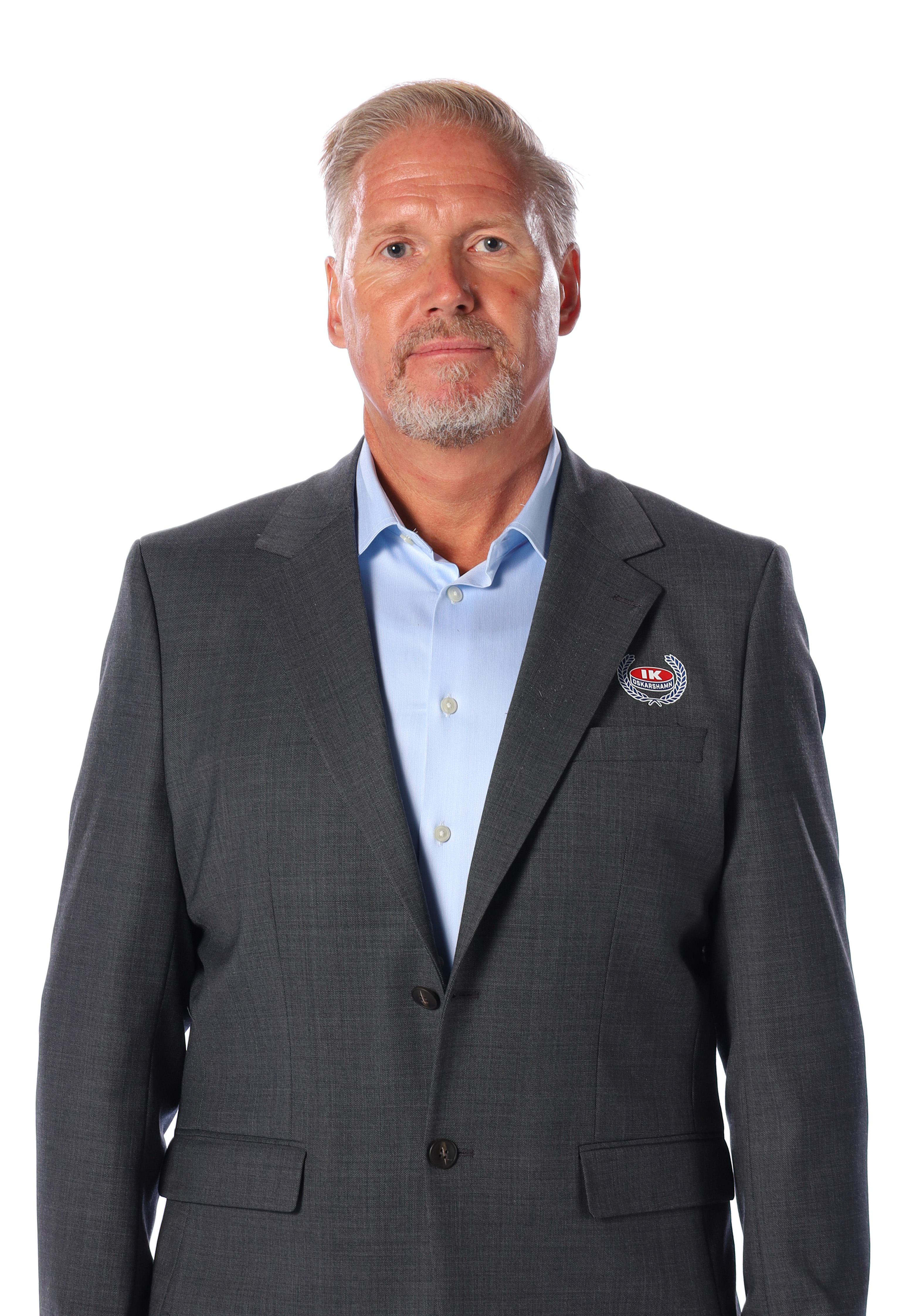
There is a way of leading a club where the most important thing seems to be never making anyone in a bigger boardroom uncomfortable. You nurture relationships, weigh your words and hope that being a valued member of the hockey family will pay off.
Then there is the approach Thomas Högklint takes in his interview with Barometern/OT on 12 November.
“Our chairman Anders Larsson must step up or resign.”
That is not particularly diplomatic. And the criticism does not stop with one person. Högklint describes reactive leadership, questions the SHL's communication directives and attacks what he sees as an unhealthy culture of silence. An environment where references to the hockey family are used to avoid open criticism.
That is where this interview becomes bigger than the issue that prompted it. Högklint does not simply say which decision he wants. He questions how power works and how those who hold it exercise their responsibilities.
We like that.
For clarity, the Swedish Ice Hockey Association has stated that Swedish national teams will not face Russia under the present circumstances. The association also describes its approach as backed by its board and coordinated with other countries. Högklint's criticism therefore concerns not just the eventual position, but the path to it and the leadership behind it.
Russia's participation, the form a boycott should take and the right approach for international hockey are all matters for debate. In purely sporting terms, a championship in which all the strong hockey nations can compete is more attractive. That does not settle the questions of war, responsibility or the conditions that should apply.
We are not going to pretend to resolve that debate here. Our point is different: IK should be able to say what the club thinks without first checking whether it will be appreciated higher up.
The contrast with Kalmar and Nybro in the same article is telling. Both are clear that Russia should not take part. But when the question turns to confidence in Swedish hockey's leadership, the answers become more cautious. Nybro's Anders Westring emphasises his confidence in the association. Kalmar's Daniel Stolt does not want to comment on an individual.
That is their right. But compared with Högklint's stance, it is timid. They make their position on the issue clear, but do not want to go as far when it comes to discussing responsibility.
Högklint does.
He does not just say that something is wrong. He says that those who lead must also be held accountable. We prefer that approach to assurances that the leadership can be trusted to make the right decisions.
For us, it is also a welcome contrast to the overly accommodating IK we felt we saw under the previous board. The sense that being accepted, considered respectable and allowed into the family had become too important.
We do not want to go back there.
Of course IK should be able to cooperate. A club needs functioning relationships, capable people and the ability to get things done with others. But cooperation is not the same as subordination. Respect is not the same as silence. And professionalism does not require you to leave your backbone outside the meeting room.
When we think of the IK we are proudest of, it is not a club that asked permission to take its place. It is an IK that believed in its own path even when others doubted it.
Not every success or failure can be explained by how much the club went against the grain. But as a compass for supporters, the distinction is clear: we recognise ourselves in an IK that dares to be itself, not an IK that tries to become a smaller copy of someone else.
Oskarshamn against the rest does not mean that the rest are always wrong. It means that the rest do not decide who we are going to be.
That is why Högklint's stance deserves praise. Not because a chairman should seek conflict for its own sake. But because he shows that a good relationship with those in power need not matter more than the right to criticise them.
If the hockey family means clubs helping one another, that is excellent. But if membership requires keeping uncomfortable opinions to yourself, the family can do without our approval.
Good, Högklint. Keep standing tall.
We are IK Oskarshamn. We are not here to fit in.
Source for the interview and statements: Barometern/OT, “Utspelet: ’Anders Larsson måste avgå’”, by Jesper Hallberg and Victor Majoran, published on 12 November 2026 at 12:00 Stockholm time. Quotations are translated from Swedish. The opinions in this column are GLID INTE's own.
Background: the Swedish Ice Hockey Association's statement on Russia and questions and answers on its position, 16 October 2026.